Use Cases
Where Shelfmark runs
Shelfmark is purpose-built for continuous-flow processes where inspection can't stop the line. Four process verticals, one monitoring approach.
The fault is always upstream of where you find it
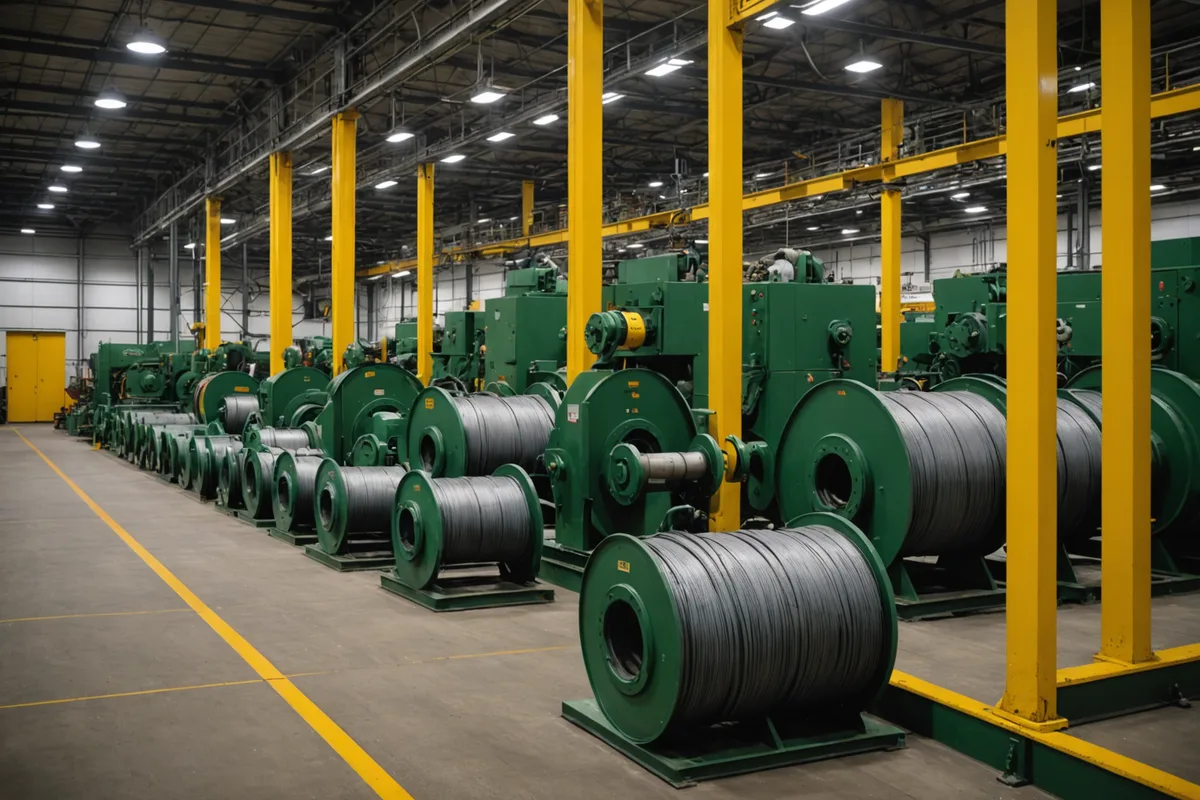
In wire drawing, surface and dimensional defects found at the spooler almost never originated at the spooler. Tracing fault origins through five to fifteen die passes manually is time-consuming and imprecise. Shelfmark correlates optical and dimensional sensor data across the entire draw sequence to identify the die stage where a defect signature begins forming, before the wire has reached the next pass.
- Surface scratch and scoring detection from the first die pass
- Dimensional drift traced to die wear or lubricant feed variation
- Break prediction signal from combined mechanical and thermal channels
- Grade change adaptation without manual threshold re-entry
Temperature, pressure, and dimensional drift at the same time
Extrusion surface defects correlate with upstream process variables in ways that are difficult to see by watching any single channel. A temperature excursion that seems within tolerance may correlate with a pressure variation and produce a surface condition that only becomes visible downstream at the die head or cooling tank. Shelfmark watches the correlated pattern across all three channels and flags the root variable before the defect is visible.
- Barrel zone temperature drift correlated to surface defect initiation
- Screw speed and pressure drop signatures linked to density variation
- Die temperature asymmetry flagged before surface streak appears
- Cooling rate variation correlated with dimensional deviation at cut
Surface crack precursors before they become surface cracks
In continuous casting, the intervention window for a solidification anomaly is measured in seconds. By the time a surface crack is visible on the strand, the material causing it has already passed the mold region. Shelfmark reads thermal signatures in the mold and secondary cooling zones to detect solidification irregularities before they develop into surface defects, giving your operators time to adjust mold oscillation, casting speed, or cooling flow.
- Thermal gradient anomalies in mold region flagged sub-second
- Secondary cooling rate deviation correlated to surface crack risk
- Mold level variation pattern detection above normal oscillation noise
- Breakout prediction model trained on your facility's historical events
Coat weight and streak detection across the full web width
Web coating defects, including coat weight variation, streaks, and edge deficiencies, develop gradually over time and are difficult to detect with end-of-line sampling. By the time a sample reveals a problem, tens or hundreds of meters of material have been coated at the wrong spec. Shelfmark monitors coat weight continuously across the web width in real time and flags streak precursors as they begin, not after the roll is finished.
- Cross-web coat weight variation detected at line speed
- Streak initiation signature correlated to die lip condition or slot variation
- Edge bead and holiday detection from optical scan data
- Cure zone temperature deviation linked to adhesion defect risk